
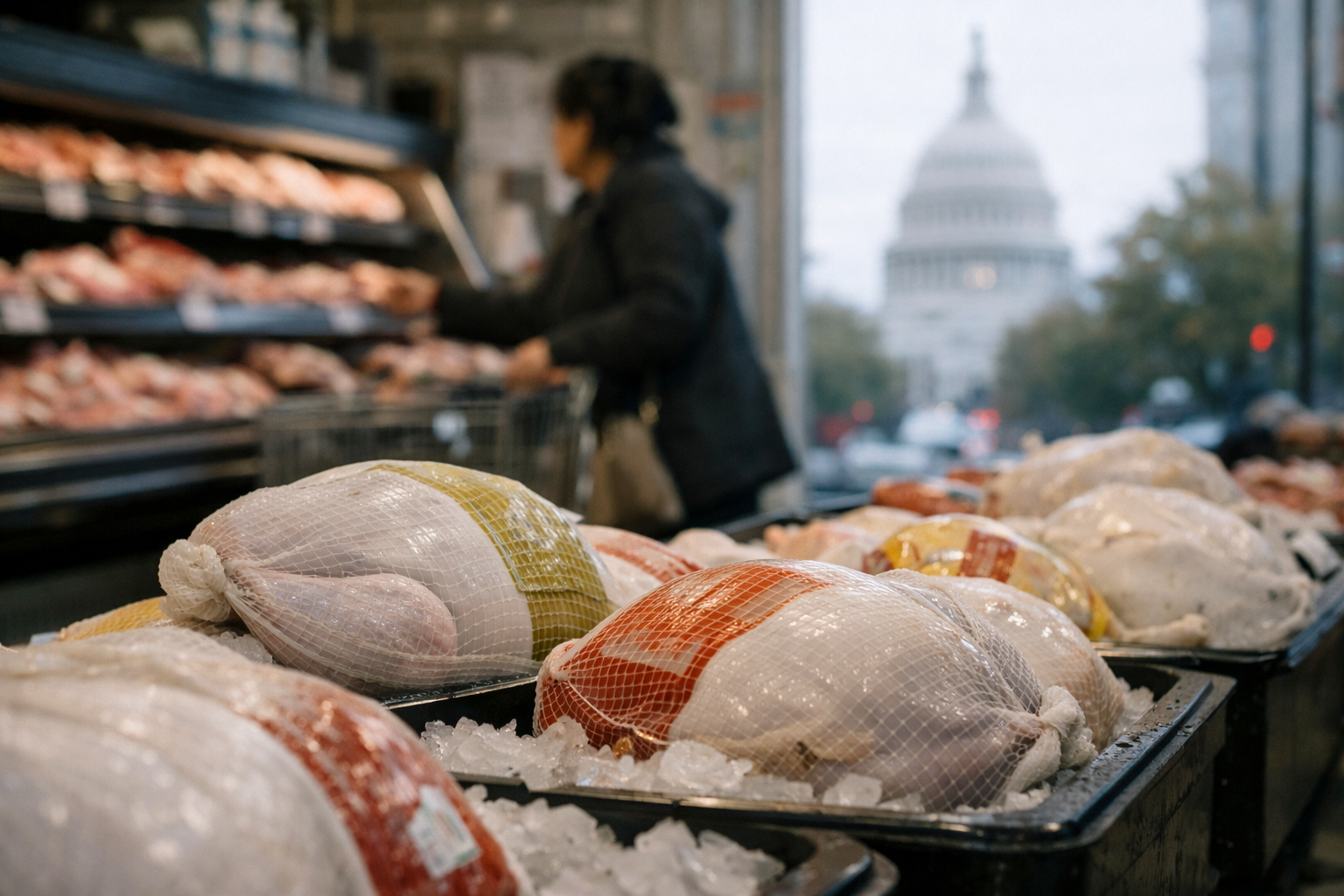
Production rebounds after two years despite bird flu, but wholesale prices surge 30%
Immigration crackdowns worsen farm labor shortages... Small pasture-raised farms hold up relatively well
Turkey production, the centerpiece of the Thanksgiving table, has rebounded for the first time in two years after weathering the impact of avian influenza (AI). However, prices have risen sharply instead due to severe labor shortages and rising logistics and production costs.
According to the U.S. Department of Agriculture (USDA), total U.S. turkey production this year is estimated at 5.1 billion pounds, an increase from last year (4.8 billion pounds), which had marked two consecutive years of decline. Still, it falls short of the 2020 pandemic-era level of 5.7 billion pounds.
Despite the increase in supply, prices showed a sharp upward trend. A USDA report projected that wholesale prices for whole turkeys (hens) will reach $1.76 per pound this year, jumping about 30% from last year's $1.36. Compared to 2024 (94 cents), this figure represents a near doubling. Fortunately, as major supermarket retailers ran steep promotional discounts with prices as low as 69 cents per pound to attract holiday shoppers, the actual consumer retail price increase calculated by the American Farm Bureau Federation (AFBF) remained at only about 10% year-over-year.
The industry points to chronic labor shortages as the primary reason prices surged despite the recovery in production. Tightened immigration enforcement and the termination of Temporary Protected Status (TPS) for certain immigrants have compounded labor shortages at slaughterhouses and processing facilities, creating supply bottlenecks. Consequently, the livestock industry is calling for the swift passage of bipartisan federal legislation to expand visa issuances for foreign seasonal workers. Leslee Oden, CEO of the National Turkey Federation (NTF), expressed concern, stating, “The reduction in TPS will cause severe operational disruptions in an already tight labor market.”
Due to this market structure, the benefits of rising prices are not reaching farmers themselves. Cameron Castillo, an associate chief economist at the Farm Bureau, analyzed, “Because overall production costs, including feed and labor, have soared significantly, farmers this year are barely reaping any economic benefit from the price increases.”
Meanwhile, unlike large-scale factory farms struggling with diseases and labor shortages, small-scale eco-friendly farms are maintaining relatively stable operations.
Jesse Straight, who operates Whiffletree Farm in Warrenton, Virginia, sells about 1,000 turkeys directly to consumers each year. He said, “Because we pasture-raise them outdoors to breathe fresh air and pay our small workforce fair wages, we have barely been affected by disease outbreaks or labor shortages.”