
84 Small and Medium-Sized Projects Flood In Following State Permitting Streamlining Law… Conflicts Arise in Howard County, Home to Many Korean Residents
“Up to 25% in Electricity Bill Savings and Rental Income for Farmers” vs. “Encroachment on Prime Farmland and Deprivation of Local Autonomy” in Fierce Debate
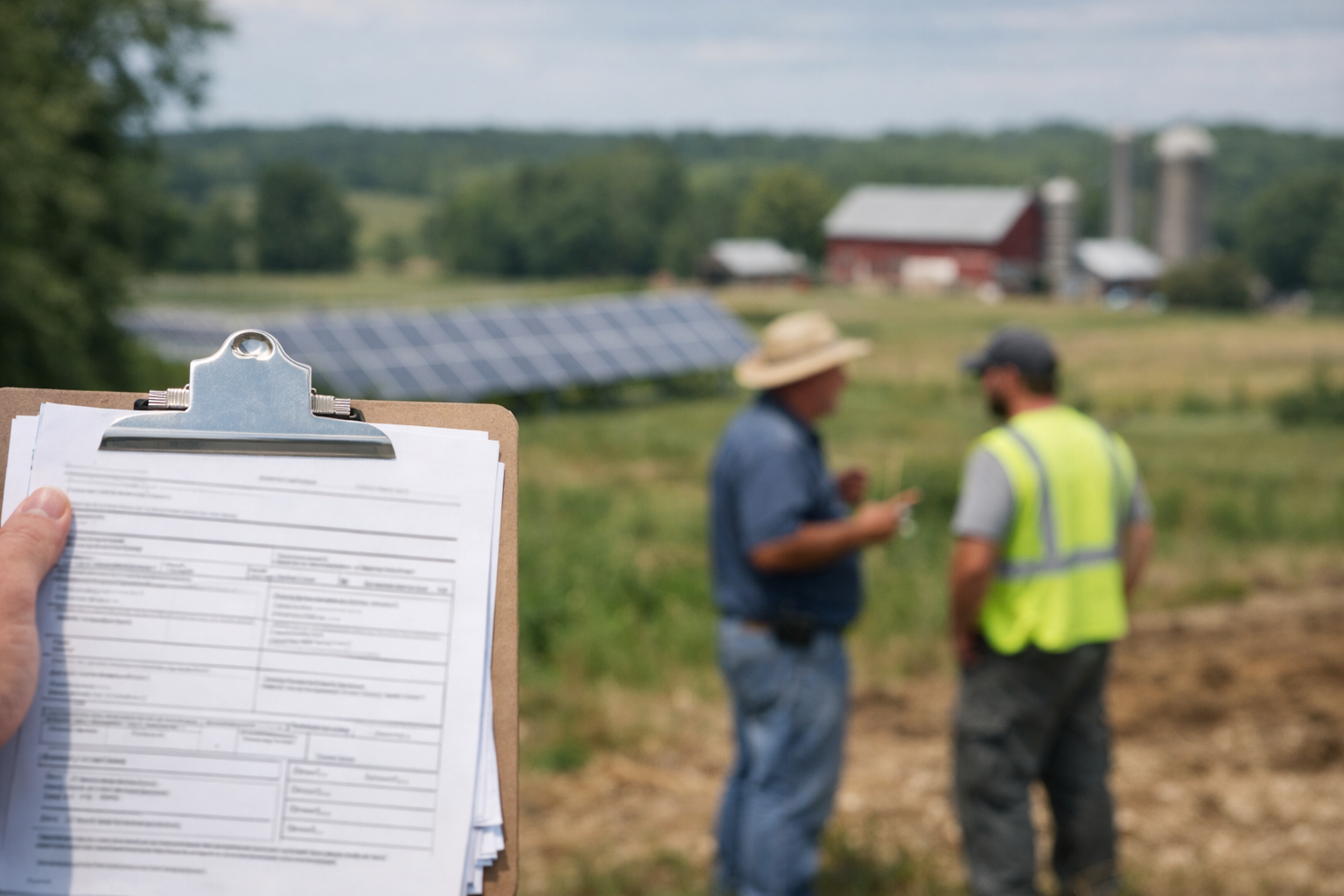
In Maryland, community conflict is intensifying as applications to build “community solar” facilities—small to medium-sized, resident-participatory solar power plants—have skyrocketed more than twentyfold over the past three years. While development projects have mushroomed after the state government significantly eased permitting regulations to expand renewable energy, backlash is mounting from local residents and governments concerned about the loss of prime farmland and the degradation of natural landscapes.
According to the latest annual report by the Power Plant Research Program (PPRP) under the Maryland Department of Natural Resources, the number of solar power plant reviews in the state, which previously averaged around four, surged to 84 as of last month. Bob Sadzinski, director of the PPRP, admitted, “While attracting solar investment is welcome, our staffing has not kept pace with the explosive growth in applications, pushing administrative capacities to their limits.”
Driving this recent surge are small and medium-sized community solar facilities with generation capacities of 2 to 5 megawatts (MW) and footprints covering 10 to 30 acres. Under this model, residential and commercial subscribers to local solar projects can receive discounts of up to 25% on their electricity bills based on the power supplied to the grid. Approximately 95% of the projects currently under review fall into this community solar category. This trend is the result of developers flocking to smaller projects with lower regulatory hurdles, rather than large-scale plants of 100 MW or more, which face difficulties in securing land and grid connections.
Behind this explosive growth in solar projects lies the Renewable Energy Certainty Act, passed by the Maryland General Assembly in 2025. Standardizing development criteria statewide and streamlining permitting processes, this law explicitly prevents county and municipal governments from enacting ordinances that ban the construction of solar and battery storage facilities outright.
The State of Maryland is also actively implementing support policies to achieve its goal of procuring 14.5% of its total electricity from solar energy by 2030 (currently at 8.7%).However, the state government-led unilateral deregulation quickly led to clashes with local governments and residents. In Howard County, home to a large Korean American population, community backlash has grown as 15 solar projects are currently underway. Last month, the County Council passed a bill imposing strict restrictions on the construction of solar facilities in agricultural preservation zones, but County Executive Calvin Ball vetoed it, claiming it "violates state law and discourages investments worth $8,300 million," triggering a conflict.
In Queen Anne's County on the Eastern Shore, a developer drew criticism from environmental groups and residents after splitting a 10MW project into three smaller facilities to circumvent strict zoning regulations. Farmers also harbor grave concerns that state law allowing up to 5% of Priority Preservation Areas to be converted to solar use will destroy prime farmland. Travis Breeding, president of the Caroline County Commissioners, criticized the approach, stating, "While trying to solve the energy crisis, we are bringing on another crisis with food and agriculture."
On the other hand, environmental groups and the industry counter that solar leasing offers a lifeline to struggling farm households. Jamie DeMarco, director at the Chesapeake Climate Action Network, emphasized, "Farming corn yields only about $750 to $1,150 per acre annually, whereas leasing land for solar guarantees a steady income of up to $2,000, keeping farmland from being sold to corporate conglomerates or falling victim to reckless development."
Meanwhile, state officials pointed out that despite the surge in permit applications, the actual completion rate remains low. Among the 94 projects approved by the Public Service Commission (PSC) since 2011, only 25% have reportedly become operational after overcoming local permitting hurdles, grid interconnection challenges, and supply chain disruptions.