
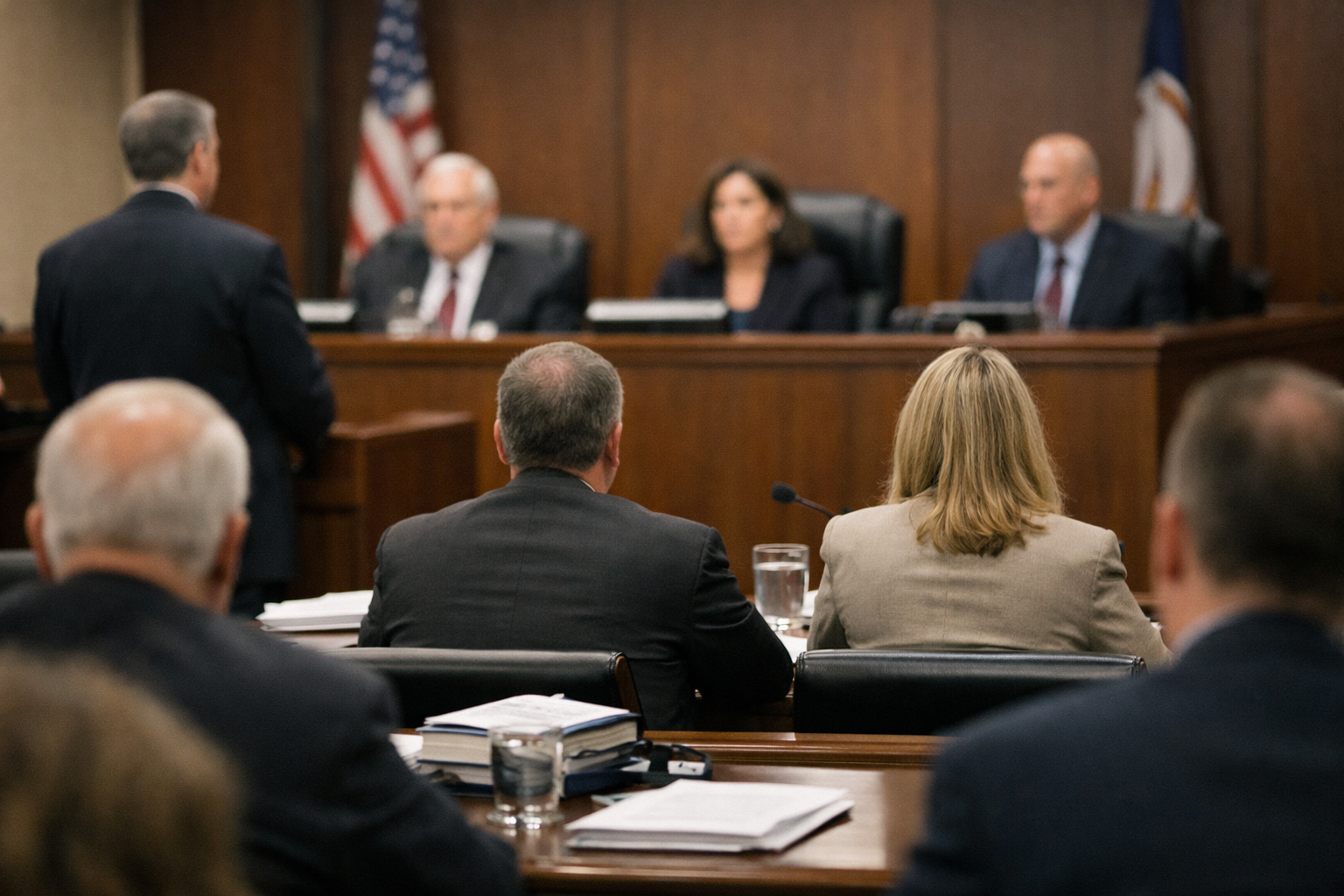
VA State Corporation Commission (SCC) Holds First Hearing
Environmental Groups and State Government Push Back: "Rate Hikes and Shifting Management Risks"
Companies: "Cost Reductions Through Large-Scale Procurement... Offering a $10 Monthly Credit"
Governor Spanberger Demands: "$29 Monthly Credit and a 6-Year Base Rate Freeze"
Regulatory authorities have formally begun hearings on the proposed $67 billion merger between Virginia’s largest power supplier, Dominion Energy, and Florida-based energy firm NextEra Energy. With the deal set to create the world's largest regulated electric utility if approved, stakeholders are engaged in a fierce debate over potential consumer rate increases and the effectiveness of proposed safeguards.
The Virginia State Corporation Commission (SCC) held its first public evidentiary hearing in Richmond on the 17th to determine whether to approve the merger between the two companies. Legal teams representing around 30 intervenors, including the state government, environmental organizations, and consumer advocacy groups, turned out in large numbers at the hearing, clashing sharply over the merger’s impact on the public interest.
The core issue of the hearing is whether the companies can prove, as required by current state law, that the transaction will not impair their ability to provide adequate service at just and reasonable rates following the merger.
Attorneys representing environmental and consumer groups argued that the companies lacked concrete evidence to support their claim that cost savings would be achieved through the joint procurement of energy infrastructure—the primary synergy touted for the merger. Instead, they pointed out that the market volatility risks tied to NextEra’s unregulated business segments could be shifted onto Virginia consumers.
Nate Benforado, an attorney with Appalachian Voices, criticized the companies, stating that the applicants failed to present any analysis showing tangible benefits to consumers or any enforceable commitments to guarantee them. Greg Habib, an attorney representing Clean Virginia, also noted, "A rate structure that forces consumers to shoulder the management risks of another company can never be considered reasonable," adding, "The proposed remedies are mere stopgap measures that fail to insulate against the root cause: the risks stemming from NextEra’s corporate governance and its other business operations."
Indeed, the electricity bill burden on Virginia residents has risen steeply.According to a report submitted by the SCC to the state energy commission, Dominion's average monthly residential electricity bill surged by 99.57% ($90.20) over roughly 20 years, rising from $90.59 in July 2007 to $180.79 in July of this year. Furthermore, with data centers continuing to crop up across the state, electricity demand is exploding, raising concerns over additional rate hikes coupled with the costs of complying with the Clean Economy Act.
In contrast, the utility company pushed back, arguing that the legal standard for reviewing the merger should be limited to the principle of "do no harm." Joseph Reid, an attorney representing Dominion, countered, "This hearing is not the venue to debate the cost of service or fair-share cost allocations for data centers. Both companies have not only accepted most of the protections, such as ring-fencing, recommended by SCC staff and the State Attorney General’s Office, but have also put forward even stronger protections of their own."
The state government and the companies are also at odds over the scale of consumer givebacks. The two companies have proposed a monthly rate credit of $10 for up to four years to serve as a bridge until the merger's benefits are fully realized.
In response, Virginia Governor Abigail Spanberger and Chief Energy Officer (CEO) Josephus Allmond demanded that the credit be significantly increased to $29 per month and that base rates be frozen for six years. Matthew McGuire, an attorney representing the governor's office, called for strict enforcement mechanisms to hold the parties accountable to their commitments if the merger is approved, stating, "Under state law, the SCC holds broad authority not only to impose civil sanctions, but also to void the merger transaction itself if necessary."
Meanwhile, during the hearing, some stakeholders, including a government procurement association, expressed dissatisfaction, complaining that the two companies failed to provide any response to their recommendations, even in their rebuttal testimony.
Following these intensive hearings, which are scheduled to continue through the Thanksgiving holiday, the three SCC commissioners must reach a final decision on whether to approve the merger by January 11 of next year.