
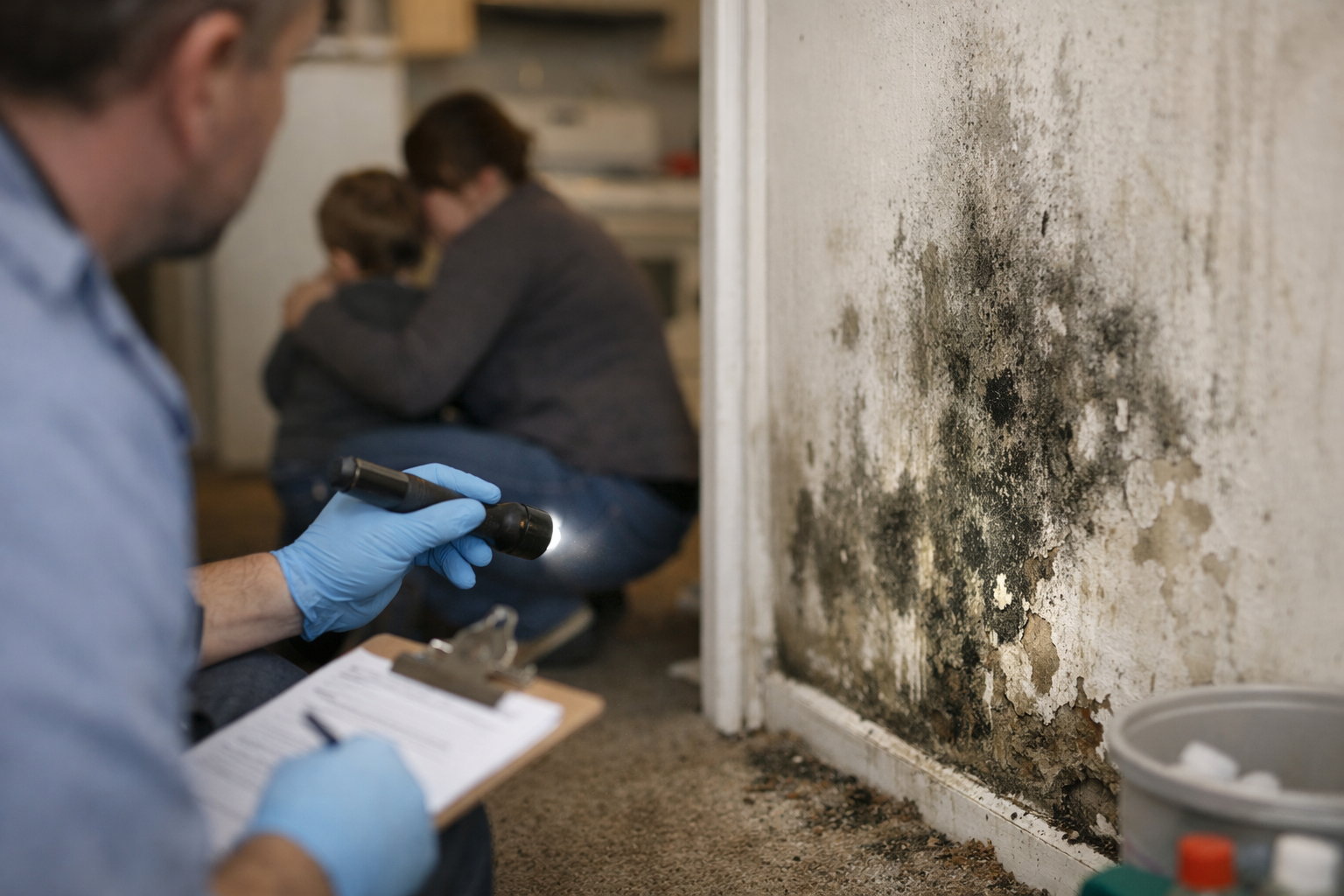
Legislation aimed at significantly strengthening the legal rights of tenants suffering from mold exposure in their residences is being pursued again in the Virginia General Assembly.
Virginia Delegate Cia Price (D-Newport News) announced plans to reintroduce an amendment to the Virginia Residential Landlord and Tenant Act (VRLTA) during the upcoming 2027 legislative session, which will clarify landlords' responsibilities for mold remediation and establish realistic criteria for tenants to claim damages.
The current Virginia Residential Landlord and Tenant Act requires landlords to prevent mold growth and take corrective actions. It also mandates that landlords provide alternative housing (such as another unit within the same community or a hotel) for up to 30 days during remediation work. However, there is no statutory obligation for landlords to compensate tenants for actual incidental losses—such as extra transportation costs incurred from relocating, lost wages, or damaged personal belongings—which has led to calls for legislative remedies.
The amendment proposed by Del. Price focuses on establishing concrete guidelines for resolving mold issues between landlords and tenants, as well as providing a legal basis for tenants to recover damages through legal proceedings when physical or property harm occurs due to mold exposure.
However, Price accepted feedback from the legal community regarding an earlier draft introduced in the previous session, which noted that setting the standard of proof for landlord negligence too high could inadvertently disadvantage tenants. The original draft required proving "gross negligence"—such as a landlord completely ignoring remediation requests or simply painting over mold—before a tenant could be reimbursed for attorney fees or medical expenses.
Jonathan Halperin, a personal injury attorney who provided legislative counsel, advised, "The provisions need to be refined so that an 'ordinary negligence' standard applies to general damages and attorney fee claims, while reserving the gross negligence standard solely for punitive damages."
Del. Price stated, "Mold often occurs through no fault of the tenant—arising instead from structural defects, inadequate ventilation, or water leaks—yet the burden of the damage has fallen entirely on the tenant." Expressing her determination to pass the bill, she added, "Through close coordination with fellow lawmakers, I intend to secure the final signature of Governor Abigail Spanberger in the upcoming session."