
Asian parents' group lawsuit against "seemingly neutral lottery system actually discriminates against Asians"
After being rejected by the lower court, the Supreme Court accepted... "A watershed moment that will determine the unconstitutionality of race-neutral admissions standards"
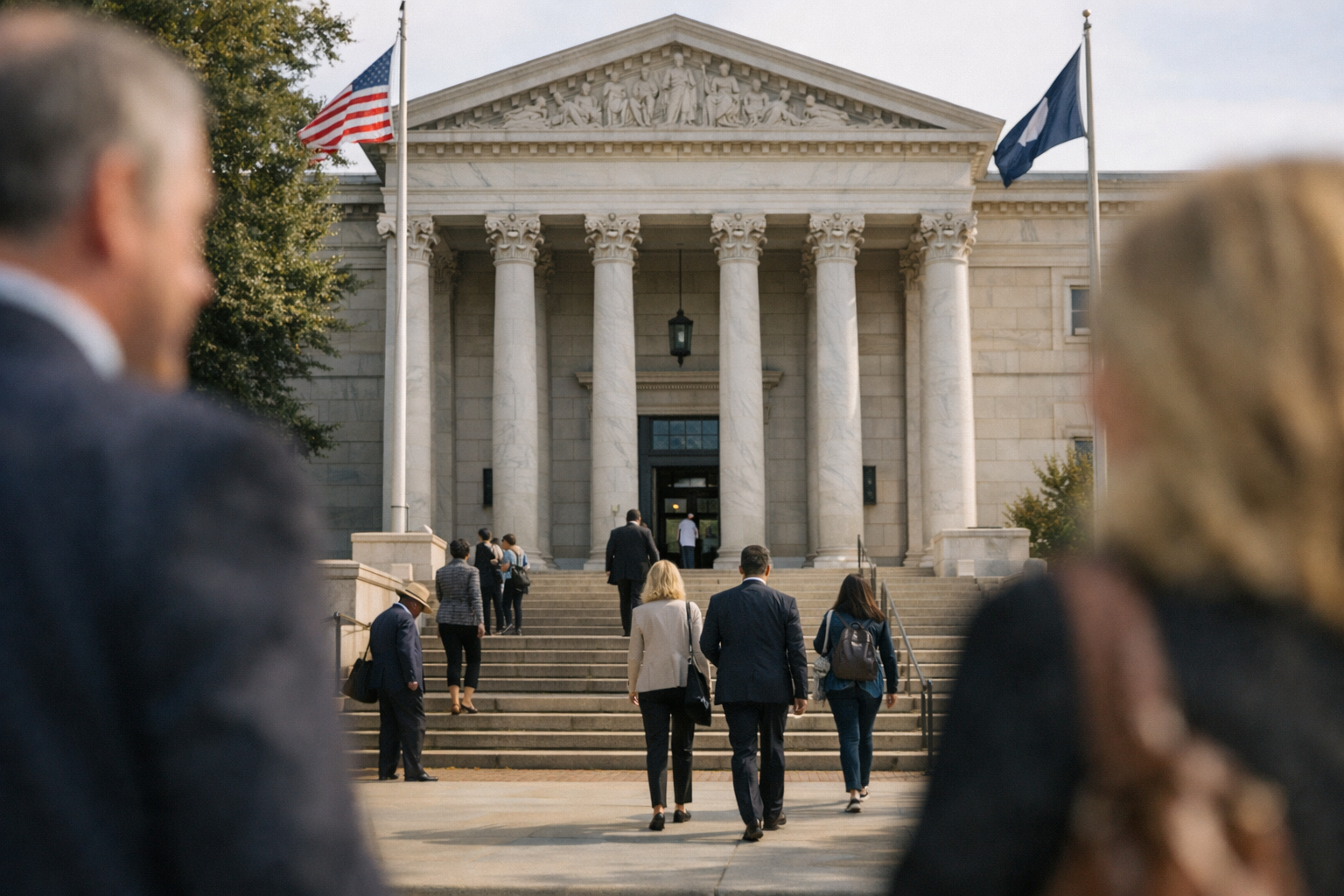
The Supreme Court decided to hear an appeal filed by a parent group claiming that Maryland's Montgomery County Public Schools (MCPS)'s middle school magnet program (specialized program) admissions lottery system disadvantages Asian students. Accordingly, the controversy over racial discrimination surrounding the admission system for prestigious public schools in the United States has again come to the attention of the Federal Supreme Court.
On the 19th, the Supreme Court announced that it would accept a request for a hearing on a lawsuit filed by the Association for Education Fairness, made up of Asian parents, against the Montgomery County Board of Education. The key issue in this case is whether a seemingly race-neutral admissions policy can be viewed as racial discrimination under the Constitution when it reduces the acceptance rate of a specific racial group compared to the overall applicant rate.
The system in question is, starting from the 2021-2022 school year, four middle schools in Montgomery County, including Takoma Park, Easton, Roberto Clemente, and Martin Luther King Jr., will ban the humanities and STEM (science, technology, engineering, and mathematics). It is a lottery-type selection method introduced in the magnet program. Chris Keyser, senior attorney at the Pacific Legal Foundation (PLF), a public interest legal group representing the plaintiffs, argued, "Using geographic factors as proxy indicators to increase enrollment for a specific group ultimately results in discrimination against other groups," and added, "This completely violates the purpose of the Supreme Court ruling that the racially discriminatory admission quota system in college admissions is unconstitutional."
On the other hand, Liliana Lopez, spokeswoman for the Montgomery County Office of Education, said In a statement, he said, "This Supreme Court hearing is a process of seeking a clear judgment on the legal standards for contesting race-neutral admissions standards," and "The Office of Education will unwaveringly continue its policy of providing equal educational opportunities to all students regardless of the Supreme Court's trial procedures."
The Maryland Federal Court, which was the first trial, and the 4th Circuit Court of Appeals, which was the second trial, found that the policy itself clearly disproportionately disadvantages Asian students based on the data proven by the plaintiff. The lawsuit was dismissed, saying it was difficult to say that it was enacted with discriminatory intent.
However, minority rights groups and human rights groups within the county counter that the lottery system made a decisive contribution to expanding educational opportunities for black and Hispanic students who had been marginalized in the past. In fact, the proportion of black and Hispanic students entering the magnet program, which was only in the single digits in 2018, was found to have rapidly increased to 30% to 40% by school after the introduction of the lottery system.In a joint statement, the Montgomery branch of the National Association for the Advancement of African-Americans (NAACP) urged the maintenance of the system, saying, "This reform is a measure that opens the door to students who have been marginalized."
This case is receiving great attention in conjunction with the case in which the Supreme Court refused to hear a hearing in February 2024 on the reform of the admission system at the prestigious Thomas Jefferson High School (TJ) in Fairfax County, Virginia. At the time, many of the Supreme Court justices respected the lower court's ruling, but conservative justices such as Justice Clarence Thomas and Justice Samuel Alito left a strong dissenting opinion, saying, "The Supreme Court should also strictly consider issues of indirect racial discrimination."
As the Supreme Court decided to finally hear the Montgomery County Magnet Admissions Case, it is expected that an important legal standard will be established in the future for setting special programs and selection criteria for excellent schools in public schools across the United States. The specific schedule for oral arguments at the Federal Supreme Court will be determined at a later date.