
Democratic Governor Wes Moore Seeks Re-election… Attention on Battlegrounds Including 5th Congressional District
Three Statewide Ballot Measures and County-Level Local Issues on the Ballot
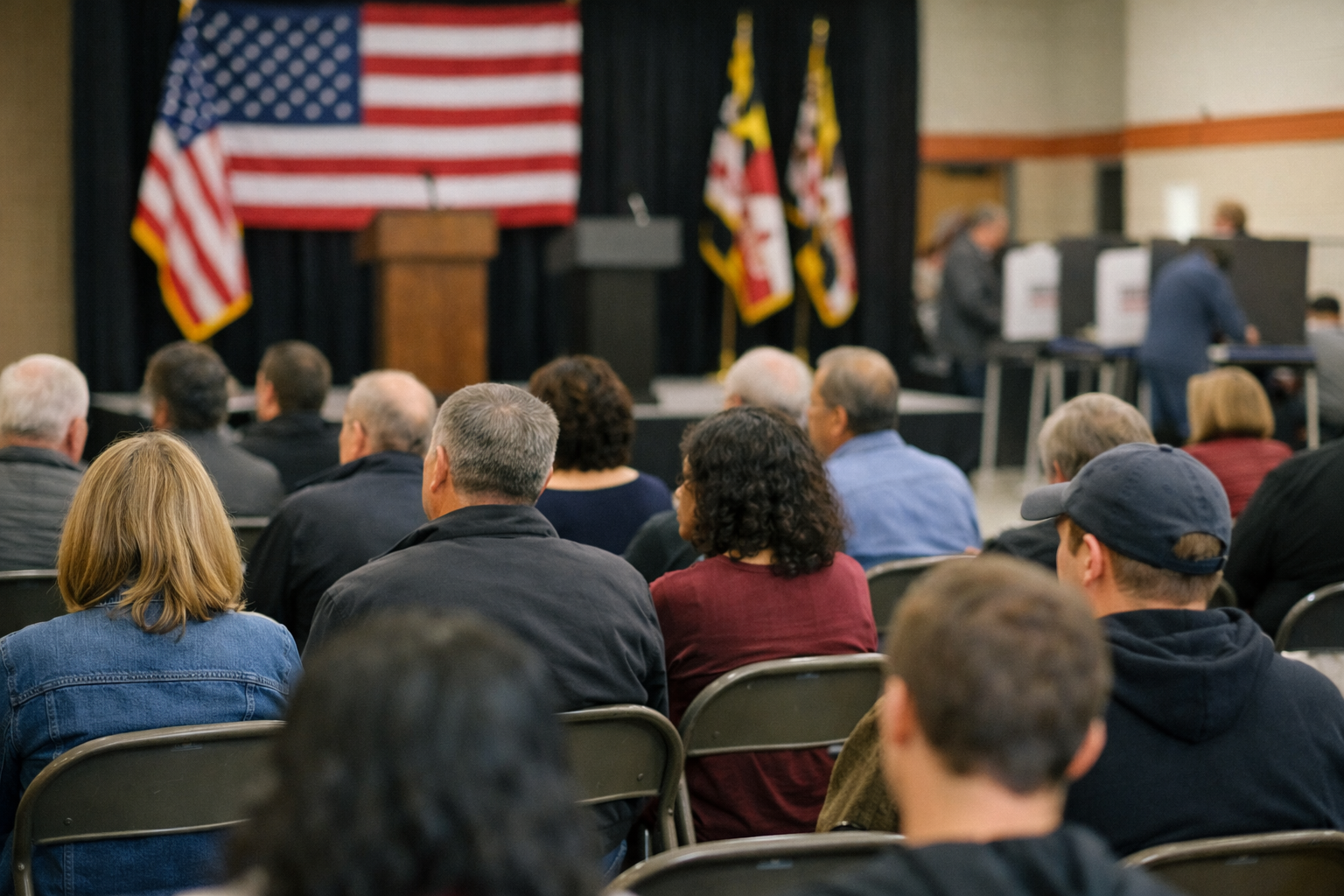
Ahead of the 2026 midterm elections on November 3, interest among Maryland voters is running high. This election will decide the governor, all members of the U.S. House of Representatives, the state legislature, and key local government officials, while three statewide ballot measures and various local issues will also appear on the ballot.
According to election officials, voter registration and mail-in ballot applications are proceeding sequentially, and voter participation is expected through various methods, including in-person voting on Election Day, early voting, and mail-in voting.
In the gubernatorial race, incumbent Democratic Governor Wes Moore and Lieutenant Governor Aruna Miller, seeking re-election, face challenges from the Republican ticket of Dan Cox and Rob Krop, as well as candidates from the Green Party and Working Class Party. In the race for Attorney General, a major statewide office, incumbent Democrat Anthony Brown faces Republican James Rutledge III, while incumbent Democrat Brooke Lierman competes against Republican Sonya Dunn for Comptroller.
Elections for all eight U.S. House districts are also shaping up to be fiercely contested. In the 5th Congressional District, where veteran Representative Steny Hoyer announced his retirement after serving since 1981, Democratic State Delegate Adrian Boafo and Republican Chris Chaffee will clash for the open seat. In the 6th Congressional District, Representative April McClain Delaney seeks re-election against Republican Robin Ficker and other contenders.
Three statewide ballot measures that all Maryland voters must decide are also in the spotlight. Question 1 would require the governor to include funding resulting from collective bargaining negotiations with state employee unions in the state budget. Question 2 concerns the appointment process for temporary alternate members of the Commission on Judicial Disabilities.
Question 3, which has emerged as the biggest political flashpoint, is a measure clarifying that state legislative redistricting standards do not apply to congressional districts. Democrats argue it is a necessary step to counter partisan gerrymandering efforts in other states, while Republicans strongly object, calling it an attempt to expand political gerrymandering so Democrats can sweep all eight congressional seats, making it one of the most closely watched issues of this election.
In addition, county-level referendums on local issues will be conducted across the state. In Prince George's County, ten local measures will be put to a vote, including the authority to levy new taxes on businesses deemed harmful to community health, such as liquor stores, tobacco shops, and self-storage facilities (Question A), and the repeal of two at-large council seats (Question B). In Howard County, a measure to replace gender-specific language in the county charter with gender-neutral terms has been placed on the ballot, while Frederick County voters will decide whether to establish term limits for county council members and the county executive.